

NCERT Class 7 Science Book Curiosity - PDF Download
Download NCERT Class 7 Science Curiosity Book
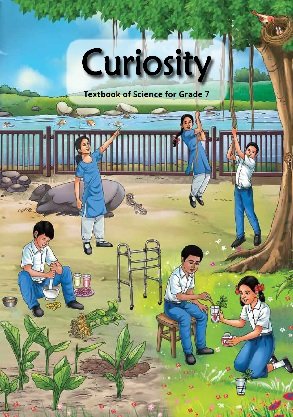
Chapter Wise Details
Chapter 1: The Ever-Evolving World of Science
This chapter introduces students to the idea of science as a continuous process of discovery. It explains how scientists observe, ask questions, test ideas, and develop new knowledge. Students learn that science is not just a collection of facts but a way of understanding the world.
The chapter builds curiosity by showing how scientific thinking is connected to everyday life.
Chapter 2: Exploring Substances Around Us
This chapter introduces different substances found in our surroundings. Students learn about materials, their properties, and how different substances can be identified based on their characteristics.
It helps students understand why different materials are used for different purposes in daily life.
Chapter 3: From Molecules to Materials
This chapter introduces the basic idea that matter is made up of tiny particles called molecules. Students explore how the arrangement and behaviour of these particles affect the properties of materials.
It creates a foundation for understanding matter at a deeper level.
Chapter 4: The World of Metals and Non-metals
Students learn about metals and non-metals, their physical properties, and their uses in everyday life. The chapter explains concepts like conductivity, hardness, and why certain materials are chosen for specific purposes.
Real-life examples help students understand the importance of metals and non-metals.
Chapter 5: Changes Around Us
This chapter explains different types of changes that occur around us. Students learn the difference between physical and chemical changes and understand how materials transform in daily life.
Examples from cooking, burning, melting, and other activities make the concepts easier to understand.
Chapter 6: Adolescence: A Stage of Growth and Change
This chapter explains the changes that occur during adolescence. Students learn about growth, development, hormones, and the importance of a healthy lifestyle during this stage.
The chapter helps students understand these natural changes scientifically.
Chapter 7: Heat Transfer and Its Effects
This chapter introduces heat and how it moves from one object to another. Students learn about different methods of heat transfer and how heat affects materials.
Everyday examples like cooking and temperature changes help explain the concepts.
Chapter 8: Motion and Time
This chapter focuses on the concepts of motion and measurement of time. Students learn how objects move, how speed is calculated, and how time helps us understand movement.
The chapter develops basic physics understanding through practical examples.
Chapter 9: The Living World Around Us
This chapter explores the diversity of living organisms around us. Students learn about different types of living beings and how they are classified based on their features.
It builds an understanding of the variety of life on Earth.
Chapter 10: Plants: Our Green Friends
Students learn about plants, their structures, and their importance. The chapter explains processes like photosynthesis and how plants support life on Earth.
It highlights the relationship between plants and the environment.
Chapter 11: Animal Life and Their Adaptations
This chapter explains how animals survive in different environments. Students learn about adaptations and how different features help animals live successfully in their habitats.
Chapter 12: Earth, Moon and the Solar System
This chapter introduces students to space and celestial bodies. Students learn about Earth, the Moon, planets, and their movements in the solar system.
It develops curiosity about the universe beyond our planet.
Chapter 13: Water: A Precious Resource
This chapter explains the importance of water and the need for conservation. Students learn about water availability, usage, and ways to protect this essential resource.
Chapter 14: Forests and Their Importance
Students learn about forests, ecosystems, and the role forests play in maintaining balance in nature.
The chapter explains why protecting forests is important for all living organisms.
Chapter 15: Waste Management and Sustainability
This chapter introduces students to waste management and sustainable practices. It explains recycling, reducing waste, and responsible use of resources.
Students learn how small actions can help protect the environment.
Science in Class 7 is not just about learning facts — it is about understanding how things work around you. From the food we eat and the materials we use to the world of plants, animals, motion, heat, and nature, science helps students connect classroom concepts with everyday life.
The NCERT Class 7 Science textbook is called Curiosity, a revised textbook designed around the idea of exploring, questioning, and understanding scientific concepts through real-life examples and activities.
Unlike traditional textbooks that focus only on definitions and formulas, Curiosity encourages students to observe things around them, ask questions, perform activities, and develop scientific thinking. The book covers important topics from biology, chemistry, physics, and environmental science through interesting explanations and practical examples.
On this page, you will find the complete NCERT Class 7 Science Curiosity PDF chapter-wise, along with a brief explanation of what each chapter covers.
Lorem ipsum dolor sit amet, consectetur adipiscing elit. Ut elit tellus, luctus nec ullamcorper mattis, pulvinar dapibus leo.
Frequently Asked Questions
How many chapters are there in NCERT Class 7 Science Curiosity?
The NCERT Class 7 Science Curiosity textbook contains 15 chapters covering different areas of science.
Is Curiosity the new NCERT Class 7 Science book?
Yes, Curiosity is the revised NCERT Science textbook introduced as part of the updated curriculum framework.
Are NCERT Class 7 Science PDFs free?
Yes, NCERT textbooks are available free of cost for students.
Do I need other Science books along with NCERT?
NCERT should be your first priority because it covers the complete syllabus and explains concepts clearly. Additional books can be used for extra practice.
Where can I find Class 7 Science solutions?
You can visit our NCERT Solutions for Class 7 Science page for chapter-wise detailed solutions.
Closing Note
At Invincible Edge Academy, we keep our NCERT book pages updated according to the latest textbooks so students can study from the correct and complete resources.
Use this page throughout the year for learning, revision, and exam preparation — not only before exams. Bookmark it and keep exploring Science with curiosity.
Related Links
-
NCERT Class 7 Sanskrit Book – Deepakam PDF Download
-
NCERT Class 7 Hindi Book Malhar - PDF Download
-
NCERT Class 7 Social Science Book – Exploring Society India and Beyond Part 1 & 2 PDF Download
-
NCERT Class 7 English Book Poorvi - PDF Download
-
NCERT Class 7 Science Book – Curiosity PDF Download
-
NCERT Class 7 Maths Book PDF – Ganita Prakash Part 1 & 2
Recent posts
-
NCERT Class 9 Social Science New Book PDF 2026-27 – Chapter Wise Download
-
NCERT Class 7 Sanskrit Book – Deepakam PDF Download
-
NCERT Class 7 Hindi Book Malhar - PDF Download
-
NCERT Class 7 Social Science Book – Exploring Society India and Beyond Part 1 & 2 PDF Download
-
NCERT Class 7 English Book Poorvi - PDF Download