

NCERT Class 10 Social Science Book – Chapter Wise PDF Download
Social Science in Class 10 is a little different from every other subject on your timetable — it’s not one book, but four. History, Geography, Political Science (Civics), and Economics are each their own NCERT textbook, and together they make up the full Social Science syllabus for your board exam. A lot of students find this subject intimidating in the beginning, mainly because there’s just so much to read — dates, events, maps, definitions, case studies — and it’s easy to feel like you’re studying four different subjects at once instead of one.
The good news is that once you separate the four books in your head and study them individually, Social Science actually becomes one of the most predictable, scoring subjects in the entire Class 10 syllabus. CBSE sets almost every board question directly from the NCERT textbook content, which means there are no surprises if you’ve genuinely read the book — no extra reference material, no outside knowledge required.
On this page, you’ll find all four NCERT Class 10 Social Science books, each with its own chapter-wise PDF download links and a short explanation of what every chapter actually covers — so you always know what you’re getting before you click.
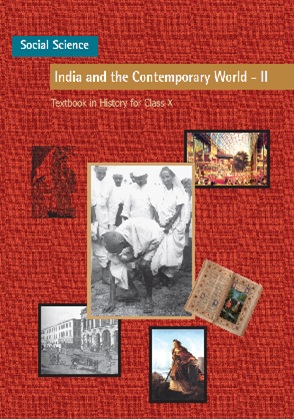
History – India and the Contemporary World II
Download NCERT Class 10 History Book – Chapter Wise:
- Prelims
- Chapter 1: The Rise of Nationalism in Europe
- Chapter 2: Nationalism in India
- Chapter 3: The Making of a Global World
- Chapter 4: The Age of Industrialisation
- Chapter 5: Print Culture and the Modern World
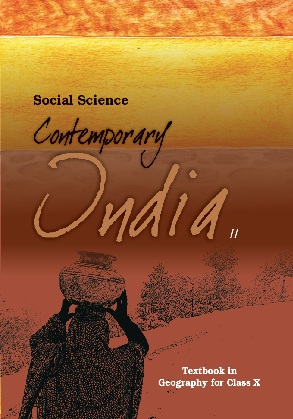
Geography – Contemporary India II
Download NCERT Class 10 Geography Book – Chapter Wise:
- Prelims
- Chapter 1: Resources and Development
- Chapter 2: Forest and Wildlife Resources
- Chapter 3: Water Resources
- Chapter 4: Agriculture
- Chapter 5: Minerals and Energy Resources
- Chapter 6: Manufacturing Industries
- Chapter 7: Lifelines of National Economy
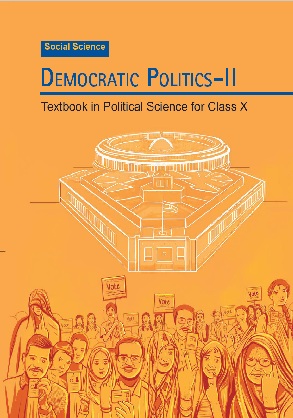
Political Science – Democratic Politics II
Download NCERT Class 10 Political Science Book – Chapter Wise:
- Prelims
- Chapter 1: Power Sharing
- Chapter 2: Federalism
- Chapter 3: Gender, Religion and Caste
- Chapter 4: Political Parties
- Chapter 5: Outcomes of Democracy
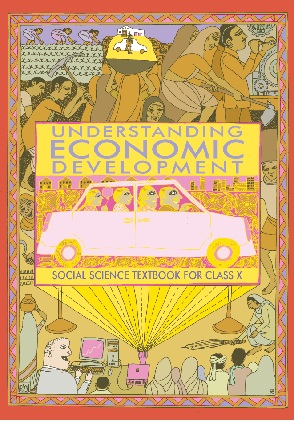
Economics – Understanding Economic Development
Download NCERT Class 10 Economics Book – Chapter Wise:
NCERT Class 10 Social Science – Chapter Wise Details
History – India and the Contemporary World II
This book traces how the modern world came to look the way it does, with a strong focus on how global events shaped India’s own history. It has 5 chapters in total, and each one builds on a major historical theme — nationalism, globalisation, industrialisation, and the spread of print.
Chapter 1: The Rise of Nationalism in Europe
This chapter explains how the idea of nationalism first took shape in 19th-century Europe, following the French Revolution. It covers the unification of Italy and Germany, the role of leaders like Giuseppe Mazzini and Otto von Bismarck, and how the concept of a “nation-state” came into existence.
Chapter 2: Nationalism in India
Here, the focus shifts to India, exploring how the freedom struggle was shaped by nationalism under colonial rule. It covers key movements like the Non-Cooperation Movement and the Civil Disobedience Movement, along with Gandhi’s idea of Satyagraha and how different social groups experienced the independence movement differently.
Chapter 3: The Making of a Global World
This chapter explains how trade, migration, and the movement of capital connected the world long before the term “globalisation” existed. It covers the Silk Route, the impact of colonisation on global trade, and the economic events of the early 20th century, including the Great Depression.
Chapter 4: The Age of Industrialisation
A look at how industrialisation changed the way goods were produced, first in Britain and then in colonial India. It covers proto-industrialisation, the shift from manual labour to machines, and how Indian industries like textiles grew under colonial conditions.
Chapter 5: Print Culture and the Modern World
The final chapter explains how the invention and spread of printing changed the way ideas, information, and opinions travelled — across Europe first, and later in India. It also touches on how print culture influenced religious reform, nationalism, and the freedom movement in India.
Geography – Contemporary India II
This is the largest of the four Social Science books, with 7 chapters covering India’s natural resources, agriculture, industries, and economic infrastructure. Geography also includes map-based questions in the board exam, so this book needs to be studied alongside a practice map.
Chapter 1: Resources and Development
This chapter introduces the different types of resources, how they’re classified, and the concept of resource planning in India. It also covers land utilisation, soil types, and the causes of land degradation — a chapter that sets the foundation for everything else in the book.
Chapter 2: Forest and Wildlife Resources
Covers the conservation of forests and wildlife in India, the classification of plant and animal species based on their conservation status, and government and community efforts toward biodiversity conservation, like Joint Forest Management.
Chapter 3: Water Resources
Explains the importance of water as a resource, the construction and impact of multipurpose river projects like dams, and the growing need for water conservation methods, including traditional rainwater harvesting techniques.
Chapter 4: Agriculture
This chapter looks at the types of farming practised in India, major crops grown in different regions, and the institutional and technological reforms that have shaped Indian agriculture, including the Green Revolution.
Chapter 5: Minerals and Energy Resources
Covers the distribution of minerals across India, the difference between metallic and non-metallic minerals, and the country’s major sources of conventional and non-conventional energy.
Chapter 6: Manufacturing Industries
Explains the role of manufacturing in India’s economy, the classification of industries, and case studies on major sectors like iron and steel, textiles, and the automobile industry.
Chapter 7: Lifelines of National Economy
The final chapter focuses on transport, communication, and trade — covering roadways, railways, waterways, and how international trade contributes to India’s economy. This chapter is also heavily map-based in the exam.
Political Science – Democratic Politics II
Also referred to as Civics, this book has 5 chapters and focuses on how democracy actually functions — not just in theory, but through real examples from India and other countries. It’s considered one of the more straightforward, concept-driven books in Social Science.
Chapter 1: Power Sharing
This chapter explains why power sharing is essential in a democracy, using real examples from Belgium and Sri Lanka to show how different communities can either successfully share power or fail to, with very different outcomes.
Chapter 2: Federalism
Covers how power is divided between different levels of government in India — central, state, and local — and how federalism helps accommodate the country’s diversity. It also looks at decentralisation through Panchayati Raj.
Chapter 3: Gender, Religion and Caste
Explores how social divisions based on gender, religion, and caste influence politics in India, and how democratic politics has worked to address inequality in each of these areas over time.
Chapter 4: Political Parties
Explains why political parties are necessary for democracy to function, the different types of party systems around the world, and the challenges facing political parties in India today.
Chapter 5: Outcomes of Democracy
The final chapter evaluates how well democracy actually delivers on its promises — economic growth, reduction in inequality, dignity, and freedom — using India as the primary case study.
Economics – Understanding Economic Development
This book has 5 chapters and introduces core economic concepts in a way that’s meant to be applied to real life, not just memorised. It’s one of the shorter books in Social Science, but the concepts here often connect directly to current events and news.
Chapter 1: Development
This chapter questions what “development” actually means, and shows how different people and countries can have very different goals when it comes to development. It also introduces concepts like per capita income and the Human Development Index.
Chapter 2: Sectors of the Indian Economy
Explains how economic activities are classified into primary, secondary, and tertiary sectors, and the difference between organised and unorganised sectors — a chapter that connects directly to real employment patterns in India.
Chapter 3: Money and Credit
Covers how money functions in an economy, the role of banks and credit, and the difference between formal and informal sources of credit — including why poorer households often rely on informal credit despite higher risks.
Chapter 4: Globalisation and the Indian Economy
This chapter explains what globalisation actually means, the factors that have enabled it, and its real impact on Indian producers, workers, and consumers — both positive and negative.
Chapter 5: Consumer Rights
The final chapter looks at consumer rights and protection in India, covering important laws, the role of consumer courts, and how to identify reliable products through certification marks like ISI and Agmark.
Why Use NCERT Books for Class 10 Social Science?
Social Science is often treated as a “less serious” subject compared to Maths or Science — students lean on guidebooks, YouTube summaries, or last-minute notes instead of actually reading the NCERT textbook. This usually backfires, especially in History and Geography, where the exact wording and structure of the NCERT explanation matters for scoring full marks. Here’s why going back to the original book is worth it:
- CBSE questions are framed directly from NCERT – Most Social Science board questions, especially the long-answer ones, are picked straight from the chapter’s content, in-text boxes, and exercise questions.
- Maps and diagrams need the original source – Geography map work and History timeline questions are best practiced using the actual NCERT maps and illustrations, not a guidebook’s simplified version.
- Concepts build on each other within a book – Political Science and Economics especially follow a logical chapter order, where later chapters assume you understood the earlier ones.
- It’s free and always accurate – Unlike third-party notes that sometimes carry outdated or incorrect information, the NCERT book is the one source you can fully trust.
How to Use This Page
- Pick the subject you need first – Use the four sections above to jump straight to History, Geography, Political Science, or Economics.
- Read a chapter before it’s taught in class – Social Science chapters, especially History and Civics, are much easier to follow in class if you’ve already read through the chapter once at home.
- Use Geography alongside a blank map – While reading Geography chapters, keep a practice map handy and try marking the locations mentioned in the chapter. This builds map memory far better than reading alone.
- Pair it with solutions – Once you’ve read a chapter, head over to our [NCERT Solutions for Class 10 Social Science] page for detailed, exam-style answers to every question in that chapter.
- Revise subject by subject, not randomly – Since the four books don’t overlap in content, it’s more effective to finish revising one subject completely before moving to the next, rather than jumping between all four.
Frequently Asked Questions
How many books are there in NCERT Class 10 Social Science?
There are four books — History (India and the Contemporary World II), Geography (Contemporary India II), Political Science (Democratic Politics II), and Economics (Understanding Economic Development).
How many total chapters are there across all four books?
There are 22 chapters in total — 5 in History, 7 in Geography, 5 in Political Science, and 5 in Economics.
Do all four subjects carry equal marks in the board exam?
Yes, History, Geography, Political Science, and Economics each carry equal weightage in the Social Science theory paper.
Is Geography really map-based in the exam?
Yes, Geography includes dedicated map-pointing questions, mainly from the chapters on Resources and Development, Manufacturing Industries, and Lifelines of National Economy.
Are these NCERT PDFs free to download?
Yes, all NCERT books are published by the Government of India and are completely free to access and download.
Where can I find solutions for these chapters?
You can check our [NCERT Solutions for Class 10 Social Science] page for detailed, chapter-wise answers across all four subjects.