

NCERT Class 9 Hindi Book – Ganga (Chapter Wise PDF Download)
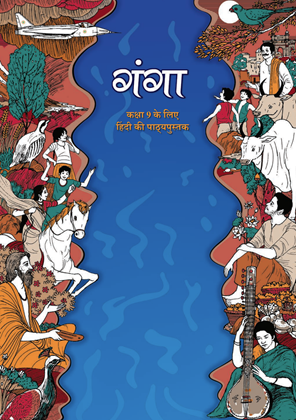
If you’ve been searching for Kshitij, Kritika, Sparsh, or Sanchayan for Class 9 Hindi and ended up confused, here’s why — NCERT has merged all four of these books into a single new textbook called Ganga, which takes effect from the 2026-27 academic session. Earlier, Hindi Course A (Kshitij, Kritika) and Course B (Sparsh, Sanchayan) were separate — now everything has been brought together into one integrated book.
Ganga is divided into two sections — Gadya Khand (Prose Section) and Kavya Khand (Poetry Section) — along with a special “Bhasha Sangam” section that connects Hindi with other Indian languages. On this page, you’ll find Ganga’s chapter-wise PDF download links, along with a short introduction to each chapter.
Download Unit-wise PDFs — Ganga (Class 9 Hindi 2026-27):
गद्य खंड
काव्य खंड
| Chapter | Chapter name | Writer |
|---|---|---|
| Chapter 1 | पद | रैदास |
| Chapter 2 | राम-लक्ष्मण-परशुराम संवाद | तुलसीदास |
| Chapter 3 | भारत, जन, विजय करें | सूर्यकांत त्रिपाठी ‘निराला’ |
| Chapter 4 | झाँसी की रानी | सुभद्रा कुमारी चौहान |
| Chapter 5 | घर की याद | भवानीप्रसाद मिश्र |
| तब याद तुम्हारी आती है | (साथ-साथ पढ़ें) रामनरेश त्रिपाठी |
What’s Inside The Chapters
Chapter 1: Do Bailon Ki Katha
This Premchand classic follows the deep bond between two bullocks, Heera and Moti, and the loyalty, courage, and longing for freedom they show through their friendship. It’s a simple story on the surface, but carries a strong emotional and moral undertone.
Chapter 2: Kya Likhoon?
Written by Padumlal Punnalal Bakshi, this is a reflective essay on writing and self-expression, encouraging students to think about where genuine writing actually comes from — outer experiences or inner emotions.
Chapter 3: Samvadheen
By Shekhar Joshi, this chapter deals with the breakdown of communication and connection between people — exploring how silence, misunderstanding, or distance can quietly affect relationships.
Chapter 4: Aisi Bhi Baatein Hoti Hain
Written by Yatindra Mishra, this chapter is an interview with the legendary singer Lata Mangeshkar, touching on her life, her dedication to music, and the struggles of her early career. It’s meant to inspire students through the value of hard work and perseverance.
Chapter 5: Aakhiri Chattan Tak
By Mohan Rakesh, this chapter is a travel-based narrative, capturing the author’s observations and reflections during a journey — often used to discuss themes of nature, distance, and human experience.
Chapter 6: Reedh Ki Haddi
This one-act play by Jagdishchandra Mathur is a sharp satire on social pretence and false notions of honour, where a young woman uses her wit to challenge patriarchal thinking. The central theme is self-respect and the intelligence of women in a society that often underestimates them.
Chapter 7: Main Aur Mera Desh
Written by Kanhaiyalal Mishra ‘Prabhakar’, this chapter explores the idea of nationality and a sense of responsibility toward one’s country, with the author drawing on personal experiences to present a thoughtful, balanced view of patriotism.
Kavya Khand (Poetry Section) — 5 Chapters
Raidas Ke Pad
These devotional verses by Sant Raidas express deep faith, equality, and sincere devotion to God. They also carry a quiet resistance against caste-based discrimination, expressed through simple yet powerful language.
Ram-Lakshman-Parshuram Samvad
This excerpt from Tulsidas’s Ramcharitmanas captures the intense exchange between Parshuram and Lakshman, dramatically portraying the conflict between humility, anger, and valour.
Bharti, Jai Vijay Karo
A patriotic poem celebrating the glory of Mother India and wishing for her continued triumph, filled with pride and love for the nation.
Jhansi Ki Rani
One of the most well-known poems by Subhadra Kumari Chauhan, this piece vividly describes the courage of Rani Lakshmibai and her role in the 1857 rebellion. It’s widely regarded as a symbol of bravery and sacrifice.
Ghar Ki Yaad
This poem captures the emotions of someone away from home — the longing, the memories, and the sense of belonging that comes with distance. The companion piece “Tab Yaad Tumhari Aati Hai” carries the same emotional thread forward.
Why Use NCERT Books for Class 9 Hindi?
Whether it’s Ganga or the earlier Kshitij/Sparsh books, the reason to study directly from the NCERT textbook stays the same:
- Board questions are framed directly from the textbook – CBSE designs almost every question around the exact emotions, language, and style used in these chapters.
- Language and grammar are taught in context – Vocabulary tied to a chapter’s theme is far easier to retain than grammar studied in isolation.
- It builds the foundation for Class 10 – The comprehension and interpretation skills practiced here directly carry into the Class 10 board exam pattern.
- It’s free and reliable – Since Ganga is a brand-new book, there’s a lot of inconsistent information floating around online — the original NCERT source remains the most trustworthy.
Frequently Asked Questions
What is Ganga, and why did NCERT introduce it for Class 9 Hindi?
Ganga is the new NCERT Hindi textbook for Class 9, introduced for the 2026-27 academic session. It replaces the earlier four books — Kshitij, Kritika, Sparsh, and Sanchayan — and is built around the NCF-SE 2023 and NEP 2020 frameworks.
How many chapters does Ganga have in total?
Ganga has 12 main chapters — 7 in the Gadya Khand (prose) and 5 in the Kavya Khand (poetry) — along with a couple of additional “Saath-Saath Padhein” companion readings.
Are Kshitij and Sparsh completely removed now?
As per NCERT’s updated curriculum, Ganga is the official textbook going forward. However, some schools may still be using the older books until their board fully transitions — it’s best to confirm with your school.
Is Ganga harder than the older Hindi books?
Not necessarily harder, just different in approach. Ganga leans more toward analytical and reflective questions, compared to the more straightforward comprehension style of the older books.
Are these PDF downloads free?
Yes, NCERT books are published by the Government of India and are completely free to access and download.
Where can I find solutions for these chapters?
You can check our [NCERT Solutions for Class 9 Hindi Ganga] page for detailed, chapter-wise answers.
Closing Note
At Invincible Edge Academy, we’ll keep this page updated, especially once Chapter 6 of the Gadya Khand is fully confirmed. Since this is a genuinely new textbook, we’d rather take a little extra time to get it right than guess and risk giving you wrong information. Bookmark this page and use it through the year.
Related Links
-
NCERT Class 9 Maths Book Ganita Manjari Part 2 - PDF Download
-
NCERT Class 9 Social Science New Book PDF 2026-27 – Chapter Wise Download
-
NCERT Class 9 Hindi Book – Ganga PDF Download (New 2026-27 Edition)
-
NCERT Class 9 English Book – Kaveri PDF Download (2026-27)
-
NCERT Class 9 Science Book – Exploration PDF Download (2026-27) | All Chapters Free
-
NCERT Class 9 Maths Book Ganita Manjari - PDF Download