

NCERT Class 8 Sanskrit Book – Deepakam PDF Download (2026-27) | All Chapters Free
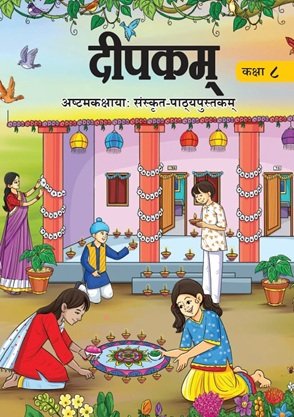
If your Class 8 Sanskrit teacher this year isn’t opening “Ruchira Bhag 3” — but instead beginning class with a lesson on unity from the Rigveda or a chapter about Digital India written entirely in Sanskrit — that’s not a surprise. NCERT has replaced the old Class 8 Sanskrit textbook with a brand-new book called Deepakam.
Deepakam is the official NCERT textbook for Class 8 Sanskrit students across India, designed under the new NCERT curriculum for CBSE. It aims to build Sanskrit language proficiency through a carefully curated blend of prose passages, poetic compositions, and structured grammar lessons. Unlike rote learning approaches, Deepakam focuses on thematic learning where each chapter carries meaningful moral, patriotic, or contemporary messages alongside language instruction — helping students connect with Sanskrit not just as a subject but as a living tradition relevant to modern India.
Download Chapter-wise PDFs — Deepakam (Class 8 Sanskrit)
Main Lesson Chapters (Pathya Khand)
Grammar & Pronunciation Sections (Vyakaran Khand)
What’s New, What’s Removed, and What’s Changed in Class 8 Sanskrit?
Old Book Replaced:
Ruchira Bhag 3 has been replaced by Deepakam for the 2026-27 session. Students using the old Ruchira textbook are no longer following the current CBSE-prescribed syllabus.
New Structure — Lessons Plus a Dedicated Grammar Section:
The Deepakam textbook contains ten main lesson chapters, followed by dedicated grammar and pronunciation sections. This is a cleaner structure than the old Ruchira, which mixed grammar exercises and lessons without as clear a separation. In Deepakam, the Pathya Khand (lesson section) and Vyakaran Khand (grammar section) are distinct, making it easier to plan study and revision.
New Thematic Approach — Ancient Meets Modern:
Where Ruchira focused primarily on traditional stories and grammar patterns, Deepakam deliberately mixes classical content (Bhagavad Gita shlokas, Subhashitas, Vedic verses on unity) with thoroughly modern themes (Digital India, health and wellness, North-East India). This blend is designed to show students that Sanskrit is not a museum artifact but a living, expressive language.
Celebration of Indian Knowledge Traditions:
Chapter 4 honours Gopabandhu Das, a celebrated Odia freedom fighter and saint-poet — marking a deliberate choice to introduce students to Indian heroes from different regions through Sanskrit. Chapter 5 brings Bhagavad Gita shlokas formally into the Class 8 curriculum in a way the old Ruchira did not.
Grammar — Systematic and Standalone:
The dedicated grammar chapters at the end of Deepakam cover pronunciation (Varnochchaarana Shiksha), noun declensions (Shabdarupani), and verb conjugations (Dhaaturupani) as standalone reference chapters — making grammar revision far more organised than before.
Frequently Asked Questions
Is Ruchira Bhag 3 still valid for Class 8 Sanskrit in 2026-27?
No. Deepakam has replaced Ruchira Bhag 3 for the 2026-27 session. Deepakam is the latest NCERT book for Class 8 Sanskrit, prepared strictly as per the NEP 2020 guidelines. Students using the old Ruchira book are not studying the current CBSE-prescribed syllabus.
How many chapters does Deepakam have in total?
The Class 8 Sanskrit Deepakam book contains a total of 16 chapters — 12 main lesson chapters covering diverse themes, plus 4 dedicated grammar and pronunciation chapters at the end.
Is Sanskrit compulsory in Class 8 CBSE?
Sanskrit is the third language option for most CBSE students. Schools that offer Sanskrit as the third language now use Deepakam. Students in schools offering other regional languages as a third language will follow a different book for that language.
Why is there a chapter about Digital India in a Sanskrit textbook?
This is one of the most deliberate and interesting features of Deepakam. By including a chapter on Digital India written entirely in Sanskrit, NCERT demonstrates that Sanskrit is capable of expressing the modern world — directly addressing the common perception that the language is outdated or impractical.
Is this book free to download?
Yes, completely free. NCERT publishes all textbooks on behalf of the Government of India. All chapter links on this page are sourced from the official NCERT website.
Where can I find solutions for Deepakam?
Visit our NCERT Solutions for Class 8 Sanskrit – Deepakam 2026-27 page for chapter-wise Hindi translations, word meanings, and answers to all grammar and comprehension exercises.
Related Links
-
NCERT Class 8 Sanskrit Book – Deepakam PDF Download (2026-27) | All Chapters Free
-
NCERT Class 8 Social Science Book – Exploring Society: India and Beyond PDF Download (2026-27)
-
NCERT Class 8 Hindi Book – Malhar PDF Download (2026-27) | All Chapters Free
-
NCERT Class 8 English Book – Poorvi PDF Download (2026-27) | All Chapters Free
-
NCERT Class 8 Science Book – Curiosity PDF Download (2026-27) | All Chapters Free
-
NCERT Class 8 Maths Book – Ganita Prakash Part 1 & 2 PDF Download (2026-27)