

NCERT Class 8 Science Book – Curiosity PDF Download (2026-27) | All Chapters Free
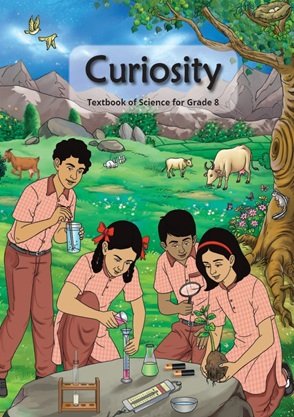
If your Class 8 Science teacher this year is asking you to “probe and ponder” before even opening the textbook — instead of jumping straight to definitions — that’s by design. NCERT has replaced the old Class 8 Science textbook with a new one called Curiosity, and it changes how science is taught right from Chapter 1.
Developed under NEP 2020 and NCF-SE 2023 guidelines, Curiosity brings down the content load, drops several outdated topics, and rebuilds the syllabus around observation, questioning, and real-life relevance — including, for the first time at this level, a dedicated Earth Science strand.
Download Chapter-wise PDFs — Curiosity (Class 8 Science)
What’s New, What’s Removed, and What’s Changed in Class 8 Science?
Topics Removed or Trimmed:
Several chapters from the older 18-chapter textbook — including separate units on crop production, cell structure, conservation of plants and animals, and reproduction in animals — have been dropped, merged, or pushed to other classes to reduce the overall load.
New and Reframed Topics:
The old “Crystallisation” and “Friction” style chapters have been consolidated and reframed. “Exploring Forces” and “Pressure, Winds, Storms and Cyclones” now combine physics and weather-science concepts that were previously taught as separate, more fragmented chapters.
A Genuinely New Addition: Earth and Space Science
“Keeping Time with the Skies” introduces students to how ancient and modern civilisations have used celestial movements to track time — connecting astronomy with calendars and everyday life. “Our Home: Earth, A Unique Life Sustaining Planet” closes the book with a systems-level view of what makes Earth capable of sustaining life, tying together the atmosphere, biosphere, and physical processes covered earlier in the book.
Why These Changes Matter:
The updated curriculum is built to connect Physics, Chemistry, Biology, and Earth Science into one coherent picture of how the natural world works, rather than treating them as separate silos — while keeping the workload manageable for students.
Chapter-Wise Overview: What You’ll Study in Curiosity
Chapter 1 – Exploring the Investigative World of Science
Introduces students to how scientists investigate the world — observation, evidence, and the process of asking good questions. Sets the tone for the inquiry-based approach used throughout the book.
Chapter 2 – The Invisible Living World: Beyond Our Naked Eye
Covers microorganisms — their types, where they’re found, and their role in health, food, and the environment.
Chapter 3 – Health: The Ultimate Treasure
Looks at health as more than the absence of disease, covering immunity, lifestyle diseases, and how factors like stress and social conditions affect wellbeing.
Chapter 4 – Electricity: Magnetic and Heating Effects
Explains the heating and magnetic effects of electric current, with everyday applications like electromagnets and heating appliances.
Chapter 5 – Exploring Forces
Covers different types of forces, including friction, and how forces affect motion and everyday activities.
Chapter 6 – Pressure, Winds, Storms and Cyclones
Connects atmospheric pressure to wind patterns, storms, and cyclones — linking physics concepts to weather phenomena.
Chapter 7 – Particulate Nature of Matter
Introduces the idea that matter is made up of tiny particles, explaining states of matter and changes between them at a particle level.
Chapter 8 – Nature of Matter: Elements, Compounds and Mixtures
Covers the classification of matter into elements, compounds, and mixtures, with examples from daily life.
Chapter 9 – The Amazing World of Solutes, Solvents and Solutions
Explores solutions, solubility, and concentration through practical, relatable examples.
Chapter 10 – Light: Mirrors and Lenses
Covers reflection, refraction, and image formation by mirrors and lenses, including real-world uses like vision correction.
Chapter 11 – Keeping Time with the Skies
Introduces celestial events and how civilisations have used them to track time, connecting astronomy to calendars and seasons.
Chapter 12 – How Nature Works in Harmony
Explores ecosystems and the interdependence of living organisms, showing how balance is maintained in nature.
Chapter 13 – Our Home: Earth, A Unique Life Sustaining Planet
Closes the book with a systems view of Earth — what makes it uniquely capable of sustaining life, tying together themes from earlier chapters.
Related Links
-
NCERT Class 8 Sanskrit Book – Deepakam PDF Download (2026-27) | All Chapters Free
-
NCERT Class 8 Social Science Book – Exploring Society: India and Beyond PDF Download (2026-27)
-
NCERT Class 8 Hindi Book – Malhar PDF Download (2026-27) | All Chapters Free
-
NCERT Class 8 English Book – Poorvi PDF Download (2026-27) | All Chapters Free
-
NCERT Class 8 Science Book – Curiosity PDF Download (2026-27) | All Chapters Free
-
NCERT Class 8 Maths Book – Ganita Prakash Part 1 & 2 PDF Download (2026-27)